Online manual handling courses are gaining traction‚ mirroring the shift towards digital learning. Platforms like GitHub’s ‘voj’ demonstrate accessible systems.
SPOCs (Small Private Online Courses) blend classroom learning with digital convenience‚ offering focused training. Lin Jun Jie’s “Always Online” reflects constant access.
Arcaea Online fosters community‚ while research publication timelines (like the five-month PRL process) highlight the value of efficient‚ modern training methods.
The Growing Need for Manual Handling Training
The demand for robust manual handling training is escalating rapidly‚ driven by increasing awareness of workplace musculoskeletal disorders (MSDs). This parallels the broader adoption of online learning platforms‚ exemplified by systems like ‘voj’ on GitHub‚ showcasing accessible digital solutions. The shift reflects a proactive approach to employee wellbeing and legal compliance.
Historically‚ manual handling incidents have resulted in significant costs for businesses – not only in terms of compensation claims but also lost productivity and employee turnover. The emergence of SPOCs (Small Private Online Courses) addresses this by delivering targeted‚ efficient training.

Furthermore‚ the dynamic nature of modern workplaces‚ with evolving tasks and technologies‚ necessitates continuous upskilling. Just as online platforms facilitate rapid research dissemination (as seen with the five-month PRL publication process)‚ they enable timely updates to manual handling protocols. The need is no longer simply about initial training‚ but ongoing reinforcement and adaptation‚ mirroring the ‘Always Online’ accessibility demanded by today’s workforce.
Why Choose Online Courses? ー Flexibility and Accessibility
Online manual handling training offers unparalleled flexibility‚ a key advantage in today’s diverse work environments. Unlike traditional classroom settings‚ online courses allow employees to learn at their own pace and schedule‚ minimizing disruption to operations – a concept echoed in the ‘Always Online’ accessibility of modern services.
Accessibility is another significant benefit. Geographic limitations are removed‚ enabling consistent training delivery across multiple sites or for remote workers. Platforms like GitHub’s ‘voj’ demonstrate the power of readily available digital resources. This is particularly valuable for organizations with dispersed teams.
Moreover‚ online learning often proves more cost-effective than in-person training‚ eliminating travel and venue expenses. The rapid publication timelines observed in research (e.g.‚ the five-month PRL process) highlight the efficiency of digital workflows‚ a benefit mirrored in streamlined online training delivery; SPOCs further enhance this by offering focused‚ targeted learning experiences.
Scope of this Article: A Comprehensive Guide
This article provides a detailed exploration of online manual handling training courses‚ navigating the evolving landscape of workplace safety education. We’ll examine the increasing need for such training‚ mirroring the ‘Always Online’ demand for accessible resources‚ and the benefits of choosing digital learning platforms – similar to the user interaction found in Arcaea Online.
Our focus extends to understanding the inherent risks associated with manual handling‚ legal requirements (with a UK perspective)‚ and the principles of effective risk assessment. We will dissect the core components of online courses‚ including ergonomic principles and proper lifting techniques.
Furthermore‚ we’ll categorize the types of training available – from general awareness to industry-specific modules – and offer guidance on evaluating providers based on accreditation (like IOSH or RoSPA)‚ content quality‚ and platform usability. Like the efficient research publication process (PRL example)‚ we aim for clarity and conciseness‚ ultimately outlining the future trends‚ including VR/AR integration and personalized learning paths.

Understanding Manual Handling Risks
Manual handling risks necessitate thorough training‚ akin to the detailed systems in ‘voj’. Ignoring ergonomics can lead to injuries‚ demanding proactive safety measures and awareness.
Common Manual Handling Injuries
Manual handling injuries are a significant concern across various industries‚ mirroring the need for robust online training solutions. These injuries frequently stem from improper lifting techniques‚ repetitive strain‚ or awkward postures – issues directly addressed by comprehensive courses. Back pain is overwhelmingly the most reported injury‚ often resulting from lifting heavy or awkwardly positioned loads without adequate support or training.
Musculoskeletal disorders (MSDs) encompass a wide range of conditions‚ including sprains‚ strains‚ and more chronic issues like carpal tunnel syndrome. The accessibility of platforms like GitHub’s ‘voj’ highlights the potential for widespread‚ readily available training. Just as a well-structured system prevents errors‚ proper manual handling techniques prevent physical harm.
Furthermore‚ injuries aren’t limited to the back; shoulders‚ necks‚ and limbs are also vulnerable. The concept of SPOCs (Small Private Online Courses) emphasizes focused learning‚ crucial for mastering safe handling practices. Effective online courses demonstrate correct and incorrect methods‚ empowering employees to mitigate these risks and fostering a safer work environment.
Legal Requirements & Regulations (UK Focus)
In the UK‚ stringent legal frameworks govern manual handling safety‚ necessitating comprehensive training. The Health and Safety at Work etc. Act 1974 places a general duty on employers to ensure the health‚ safety‚ and welfare of their employees. Specifically‚ the Management of Health and Safety at Work Regulations 1999 require employers to assess risks and implement control measures‚ including suitable training.
The Manual Handling Operations Regulations 1992 further detail these requirements‚ outlining the need for risk assessments‚ reduction of manual handling risks where reasonably practicable‚ and provision of adequate information‚ instruction‚ and training. Online courses‚ mirroring the accessibility of platforms like GitHub’s ‘voj’‚ offer a convenient and cost-effective means of demonstrating compliance.
Just as Arcaea Online fosters a community‚ adherence to these regulations fosters a safe working environment. Failure to comply can result in significant penalties. Accredited online training provides documented evidence of employee competency‚ crucial during inspections and demonstrating a proactive safety culture‚ similar to the structured approach of SPOCs.
Risk Assessment Principles in Manual Handling
Effective risk assessment is paramount in preventing manual handling injuries. The process begins with identifying tasks involving manual handling‚ mirroring the systematic approach of platforms like GitHub’s ‘voj’ for identifying code vulnerabilities. Next‚ assess the risks – considering factors like weight‚ frequency‚ posture‚ and the environment.
A robust assessment evaluates the potential for harm‚ considering both the likelihood and severity of injury. Control measures should then be implemented‚ prioritizing elimination or reduction of the risk. Online training‚ akin to the accessible nature of SPOCs‚ can effectively communicate these principles.
Regular review and updates are crucial‚ reflecting changes in tasks or the working environment. Just as Arcaea Online evolves with player feedback‚ risk assessments must adapt. Documentation is vital‚ providing evidence of due diligence. Online courses often include assessment tools‚ reinforcing understanding and promoting a proactive safety culture‚ similar to the detailed review process of research publications like those submitted to PRL.
Core Components of Online Manual Handling Courses
Essential course elements include ergonomic principles‚ proper lifting techniques‚ and safe carrying methods. These build upon accessible platforms‚ like GitHub’s ‘voj’‚ for knowledge delivery.
Ergonomic Principles Explained
Ergonomics‚ at its core‚ focuses on designing workplaces and tasks to fit the worker‚ minimizing physical strain and risk of injury. Online manual handling courses dedicate significant portions to explaining these principles‚ moving beyond simply stating “lift with your legs.”
Key concepts include maintaining a neutral spine – avoiding excessive bending or twisting – and understanding the importance of keeping loads close to the body. Courses detail how to assess workstation setup‚ ensuring proper chair height‚ screen positioning‚ and reach distances. They emphasize minimizing repetitive motions and forceful exertions.
The integration of platforms‚ mirroring the accessibility of systems like GitHub’s ‘voj’‚ allows for interactive demonstrations and visual aids. Just as Arcaea Online fosters community‚ these courses often include forums for discussion and peer learning. Understanding biomechanics – how the body moves – is crucial‚ and online modules break down complex concepts into digestible segments. The goal is to empower individuals to proactively identify and mitigate ergonomic hazards in their specific work environments‚ promoting long-term musculoskeletal health.
Lifting Techniques – Correct and Incorrect Methods
Online manual handling training excels at visually demonstrating proper lifting techniques‚ contrasting them with common‚ yet harmful‚ practices. Courses utilize videos and animations to illustrate the “neutral spine” position‚ emphasizing a slight bend at the knees and hips‚ keeping the back straight.
Incorrect methods – such as bending from the waist‚ twisting while lifting‚ or lifting loads that are too heavy – are explicitly shown‚ highlighting the increased risk of strain and injury. The importance of planning the lift‚ clearing the path‚ and getting a firm grip are stressed.
Similar to the interactive nature of platforms like Arcaea Online‚ many courses incorporate quizzes and practical exercises to reinforce learning. They often address variations in lifting techniques based on load size‚ shape‚ and distance. Just as research publication requires careful review (like the five-month PRL process)‚ mastering lifting techniques requires practice and attention to detail. The aim is to instill a safe lifting mindset‚ preventing injuries before they occur.
Carrying and Moving Loads Safely
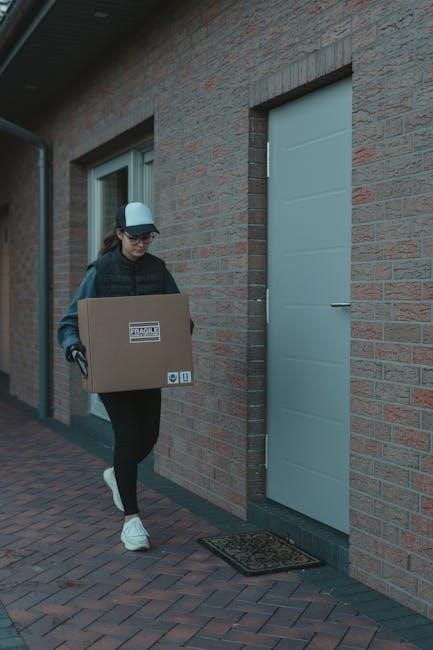
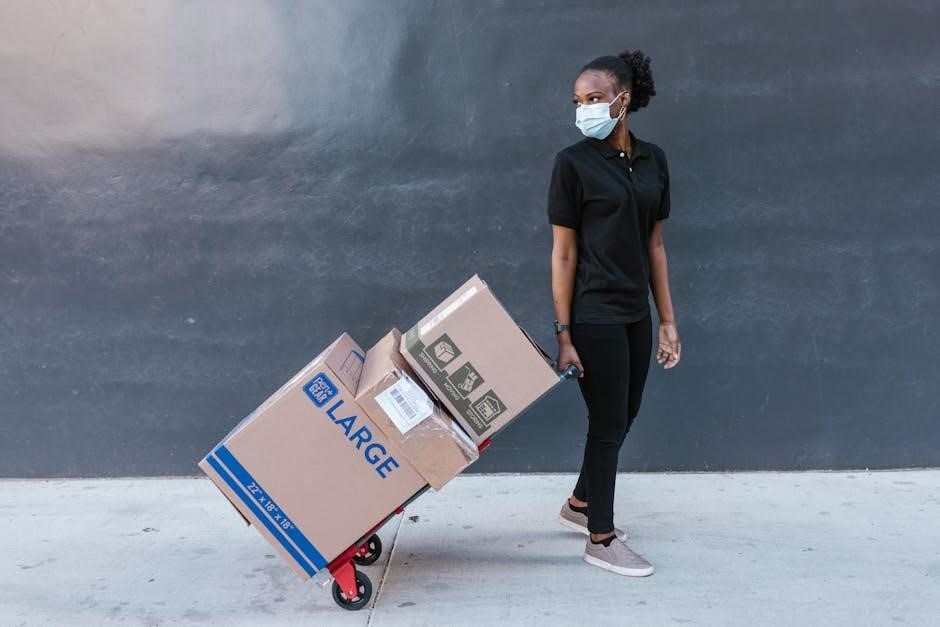
Online manual handling courses dedicate significant attention to safe carrying and moving practices‚ extending beyond the initial lift. They emphasize keeping the load close to the body‚ maintaining a good posture‚ and avoiding twisting motions while walking. Courses demonstrate how to distribute weight evenly and utilize appropriate carrying aids like trolleys or hand trucks.
The importance of assessing the carrying route for obstacles and ensuring adequate space is highlighted‚ mirroring the clear pathways needed in systems like GitHub’s ‘voj’. Just as SPOCs combine structured learning with practical application‚ these courses encourage applying safe carrying principles in real-world scenarios.
Training often covers team lifting techniques‚ emphasizing communication and coordinated movements. Similar to the collaborative spirit of Arcaea Online‚ teamwork is presented as a key element of safety. The courses stress that‚ like the careful review process of research publications (PRL example)‚ a proactive approach to hazard identification is crucial for preventing incidents.

Types of Online Manual Handling Training Available
Diverse online courses cater to varied needs‚ from general awareness to industry-specific modules (healthcare‚ construction). Refresher options ensure ongoing compliance‚ like updated software versions.
General Awareness Courses
General awareness courses form the foundational layer of manual handling training‚ designed to introduce core principles to a broad audience. These courses‚ often the first step for employees‚ emphasize recognizing potential hazards associated with lifting‚ carrying‚ and moving loads. They typically cover basic ergonomic principles‚ illustrating correct and incorrect techniques through visual aids and interactive modules – mirroring the accessibility found in platforms like GitHub’s ‘voj’.

The content focuses on understanding the common types of manual handling injuries‚ such as musculoskeletal disorders (MSDs)‚ and the importance of proactive risk assessment. Similar to the interactive nature of Arcaea Online‚ these courses often incorporate quizzes and scenarios to reinforce learning. They don’t delve into industry-specific complexities‚ instead providing a universally applicable understanding of safe practices.
These introductory programs aim to cultivate a safety-conscious culture‚ encouraging employees to report potential risks and actively participate in maintaining a safe working environment. They are often a prerequisite for more specialized training‚ building a base knowledge akin to the initial stages of a research publication process‚ like the five-month PRL review.
Specific Industry Courses (Healthcare‚ Construction‚ etc.)
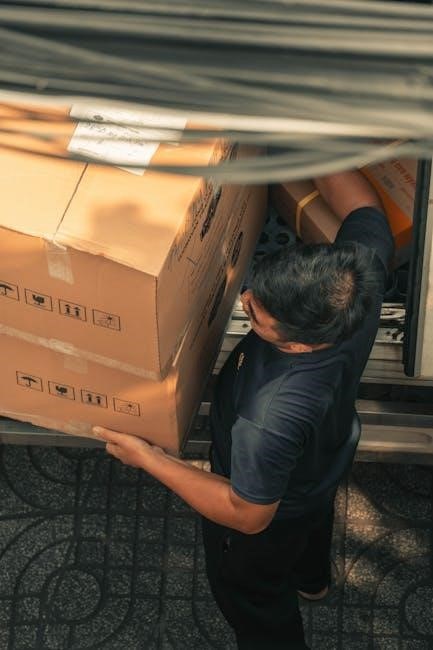
Industry-specific online manual handling courses build upon general awareness training‚ tailoring content to the unique demands of various sectors. Healthcare courses‚ for example‚ focus on patient handling techniques‚ minimizing risks for both caregivers and patients – a focused approach similar to SPOCs (Small Private Online Courses). Construction courses address the challenges of handling heavy materials on site‚ emphasizing teamwork and specialized equipment usage.
These specialized programs often incorporate real-world scenarios relevant to the specific industry‚ utilizing case studies and simulations. They address the legal requirements and regulations pertinent to each sector‚ ensuring compliance. The interactive elements‚ reminiscent of Arcaea Online’s player interaction‚ may include virtual site tours or patient transfer simulations.
Content is frequently developed in consultation with industry experts‚ ensuring practical relevance and addressing the most common hazards. Like the detailed review process of a PRL publication (taking up to five months)‚ these courses undergo rigorous quality control to guarantee effectiveness and accuracy‚ ultimately reducing workplace accidents and costs.
Refresher Courses & Updates
Online refresher courses are crucial for maintaining competency in manual handling‚ mirroring the need for continuous updates in systems like GitHub’s ‘voj’. Regulations and best practices evolve‚ necessitating periodic retraining – a concept akin to the “Always Online” accessibility demanded by modern life.
These courses typically condense core principles‚ focusing on recent changes in legislation or emerging risk factors. They serve as efficient reminders of proper techniques‚ reinforcing safe habits and addressing any knowledge gaps. The format often utilizes microlearning modules‚ delivering information in short‚ digestible bursts‚ enhancing retention.
Updates are frequently triggered by incident reports or changes in industry standards‚ ensuring relevance. Similar to the publication timeline of research (2-3 months for SCI indexing)‚ updates are delivered promptly. Interactive elements‚ like those found in Arcaea Online‚ can be incorporated to assess understanding and encourage engagement‚ ultimately contributing to a safer work environment and demonstrating compliance.
Evaluating Online Training Providers
Selecting a provider requires scrutiny‚ like assessing systems such as GitHub’s ‘voj’. Accreditation (IOSH‚ RoSPA) and content quality are key‚ mirroring research publication standards.
Accreditation and Certification (e.g.‚ IOSH‚ RoSPA)
Accreditation from recognized bodies like IOSH (Institution of Occupational Safety and Health) and RoSPA (Royal Society for the Prevention of Accidents) signifies a robust and quality-assured online manual handling training program. These organizations establish rigorous standards‚ ensuring course content aligns with current legislation and best practices.
Choosing an accredited course demonstrates a commitment to workplace safety and provides employers with confidence in the training’s effectiveness. Similar to the thorough review process of academic publications – as seen with the five-month PRL submission timeline – accreditation involves independent assessment and validation.
Certification provides employees with verifiable proof of competence‚ enhancing their skills and knowledge. It’s akin to the ‘online’ status of published research‚ signifying official recognition; Look for courses that offer downloadable certificates upon completion‚ and verify the accreditation body’s legitimacy. Accreditation isn’t merely a badge; it’s a guarantee of quality and compliance‚ mirroring the reliability of platforms like GitHub’s ‘voj’.
Course Content Quality & Relevance
High-quality online manual handling courses must deliver content that is both comprehensive and directly applicable to real-world workplace scenarios; The material should cover fundamental ergonomic principles‚ correct lifting techniques‚ and safe load carrying procedures‚ mirroring the detailed interaction found in platforms like Arcaea Online.
Relevance is paramount; courses should address industry-specific risks where applicable‚ acknowledging that manual handling challenges differ between healthcare‚ construction‚ and office environments. Content should be regularly updated to reflect changes in legislation and best practices – much like the evolving versions of GTA 5 (Heritage vs. Enhanced).
Effective courses utilize a variety of learning methods‚ including videos‚ interactive exercises‚ and assessments. The information should be presented clearly and concisely‚ avoiding jargon. Just as a successful online judge system like ‘voj’ requires clear problem statements‚ training content needs to be easily understood and retained‚ ensuring practical application and improved safety outcomes.
Platform Usability & Technical Support
A user-friendly platform is crucial for successful online manual handling training. The learning management system (LMS) should be intuitive‚ easy to navigate‚ and accessible across various devices – mirroring the seamless experience desired in platforms like Arcaea Online. Clear instructions and a logical course structure are essential.
Robust technical support is equally important. Learners should have access to prompt assistance via email‚ phone‚ or live chat to resolve any technical issues encountered during the course. This support should extend to troubleshooting compatibility problems and navigating the LMS features.
Just as GitHub’s ‘voj’ relies on a stable and functional system‚ online training platforms must be reliable and consistently available. Regular maintenance and updates are necessary. Furthermore‚ the platform should offer features like progress tracking‚ downloadable resources‚ and certificate generation‚ enhancing the overall learning experience and demonstrating value‚ similar to the publication process with journals like PRL.

Benefits of Accredited Online Manual Handling Training
Accreditation‚ like IOSH or RoSPA‚ demonstrates compliance and reduces workplace risks. Efficient training‚ mirroring quick online publication‚ lowers costs and boosts morale.
Demonstrating Compliance
In today’s regulated environment‚ proving adherence to health and safety standards is paramount. Accredited online manual handling training provides verifiable evidence of employee competency‚ crucial during inspections or audits. Just as research publication‚ like the five-month PRL process mentioned‚ requires documented proof of rigor‚ so too does workplace safety training.
Completing a recognized course‚ potentially through platforms mirroring the accessibility of systems like GitHub’s ‘voj’‚ generates certificates and training records. These records demonstrate a proactive approach to risk management‚ satisfying legal obligations and showcasing a commitment to employee wellbeing. The shift towards online learning‚ akin to the “Always Online” accessibility highlighted by Lin Jun Jie‚ ensures training is readily available and consistently documented.
Furthermore‚ a clear audit trail of completed training‚ facilitated by digital platforms‚ simplifies compliance reporting. This streamlined process‚ much like the efficient online publication of scientific articles‚ saves valuable time and resources‚ allowing businesses to focus on core operations while maintaining a safe and legally compliant workplace.
Reducing Workplace Accidents & Costs
Investing in online manual handling training directly correlates with a decrease in workplace accidents and associated costs. Similar to how a robust system like GitHub’s ‘voj’ minimizes errors‚ proper training equips employees with the knowledge to identify and mitigate risks.
Musculoskeletal disorders (MSDs) are a leading cause of workplace injury‚ resulting in lost productivity‚ medical expenses‚ and potential legal claims. Effective training‚ mirroring the focused approach of SPOCs (Small Private Online Courses)‚ teaches correct lifting techniques and safe handling procedures‚ minimizing strain and preventing injuries. The interactive elements found in platforms like Arcaea Online can translate to engaging training modules.
By proactively addressing these risks‚ companies can significantly reduce insurance premiums and compensation claims. The efficiency of online training‚ comparable to the rapid online publication of research‚ also minimizes downtime and disruption to operations. Ultimately‚ a safer workplace fosters improved employee morale and a more productive workforce‚ contributing to long-term cost savings.
Improving Employee Morale & Productivity
Online manual handling training demonstrably boosts employee morale by showcasing a company’s commitment to their wellbeing. Just as platforms like GitHub’s ‘voj’ empower developers‚ training empowers employees with skills to perform their jobs safely and confidently. This fosters a sense of value and respect.
When employees feel safe and supported‚ their productivity naturally increases. Reduced risk of injury translates to fewer sick days and less disruption to workflow. The engaging nature of modern online courses‚ akin to the interactive experience of Arcaea Online‚ keeps employees motivated and attentive.
Furthermore‚ clear understanding of proper techniques minimizes physical strain‚ leading to greater comfort and efficiency throughout the workday. This proactive approach‚ mirroring the swift publication timelines of research (like the five-month PRL process)‚ demonstrates a forward-thinking company culture‚ attracting and retaining top talent. A positive work environment directly impacts output and overall success.

The Future of Online Manual Handling Training
Future training will integrate VR/AR‚ offering immersive experiences like Arcaea Online’s interactivity. Personalized learning paths‚ mirroring efficient research publication‚ will optimize skill development.
Integration of Virtual Reality (VR) & Augmented Reality (AR)
The evolution of online manual handling training is poised for a significant leap with the integration of Virtual Reality (VR) and Augmented Reality (AR) technologies. Moving beyond traditional screen-based learning‚ VR offers fully immersive simulations of workplace environments‚ allowing trainees to practice lifting techniques and hazard identification in a safe‚ controlled‚ and realistic setting.
Imagine a warehouse scenario replicated in VR‚ where users can repeatedly lift boxes of varying weights and sizes‚ receiving immediate feedback on their posture and technique. AR‚ conversely‚ overlays digital information onto the real world. This could involve using a tablet or smartphone to scan a workplace and highlight potential manual handling risks‚ or providing real-time guidance on proper lifting form as an employee performs the task.
This mirrors the interactive elements found in platforms like Arcaea Online‚ fostering engagement and knowledge retention. Such technologies promise to dramatically improve training effectiveness‚ reduce workplace accidents‚ and enhance employee confidence – ultimately contributing to a safer and more productive work environment. The efficiency gains echo the streamlined publication processes observed in research‚ like the five-month PRL turnaround.
Personalized Learning Paths
The future of online manual handling training lies in moving away from ‘one-size-fits-all’ approaches towards personalized learning paths. Recognizing that employees have diverse learning styles‚ prior experience‚ and job roles‚ adaptive training systems can tailor content and difficulty levels to individual needs.
Similar to the dynamic data streams utilized in online learning systems (like those processing KafkaMQ data)‚ these platforms will assess a trainee’s understanding through ongoing assessments and adjust the curriculum accordingly. A healthcare worker‚ for example‚ would receive training focused on patient handling‚ while a construction worker would focus on heavy lifting and site-specific hazards.
This echoes the concept of SPOCs (Small Private Online Courses)‚ offering focused‚ relevant training. The interactive nature of platforms like Arcaea Online demonstrates the power of engagement. Personalized paths improve knowledge retention‚ boost employee morale‚ and ensure that training directly addresses the specific risks faced by each individual‚ ultimately maximizing the return on investment in safety.
Microlearning & Mobile Accessibility
The demands of a modern workforce necessitate training that is both concise and readily accessible. Microlearning – delivering information in short‚ focused bursts – addresses this need perfectly. Think of it as breaking down complex manual handling principles into easily digestible modules‚ each taking just a few minutes to complete.
Coupled with mobile accessibility‚ this allows employees to learn ‘on-the-go’‚ fitting training into their busy schedules. This mirrors the ‘Always Online’ accessibility championed by artists like Lin Jun Jie‚ ensuring learning isn’t confined to a desktop computer or specific time slot.
Just as platforms like GitHub’s ‘voj’ offer accessible systems‚ mobile-friendly training platforms empower employees to reinforce safe practices at the point of need. This constant reinforcement‚ combined with the focused nature of microlearning‚ significantly improves knowledge retention and promotes a stronger safety culture‚ ultimately reducing workplace incidents and associated costs.